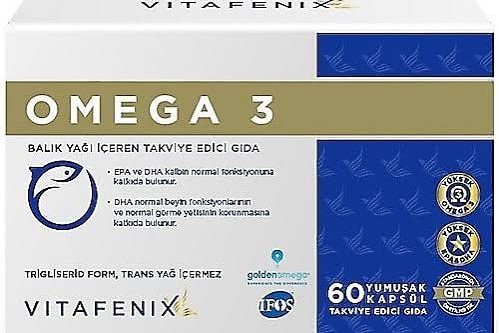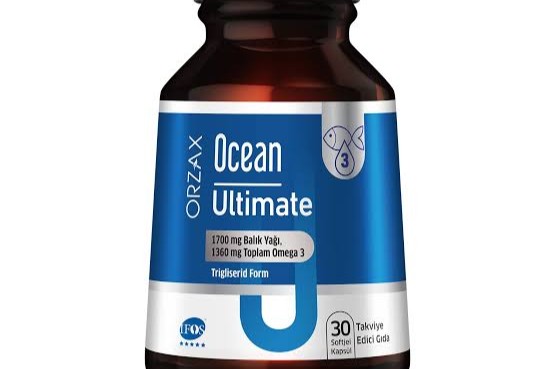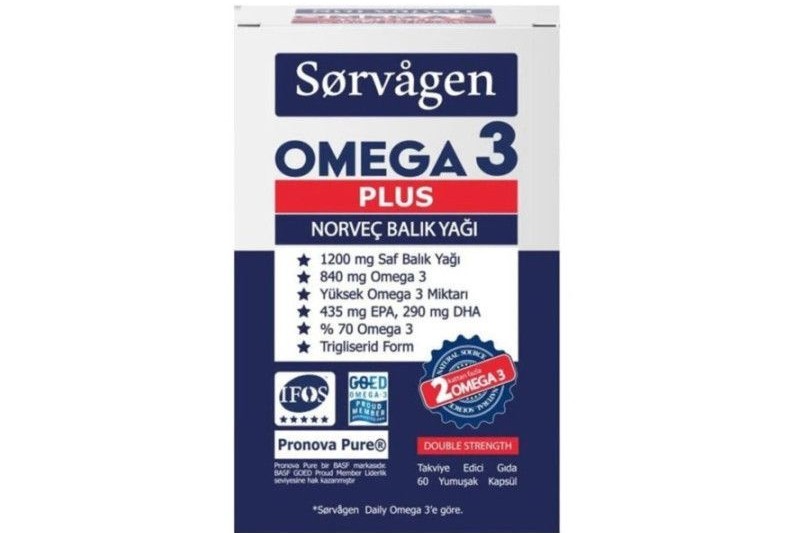

Approved Health Claims and Conditions
EFSA (European Food Safety Authority) approved health claims for omega-3 fatty acids are only valid when specific daily intake amounts are met. These claims clearly show the consumer what benefits the product can provide at what dosage. Intakes at the 250 mg level, in particular, provide a protective effect. Therefore, you should check that the daily serving of your chosen supplement contains at least 250 mg of EPA and DHA.
Approved Health Claims:
- Contributes to normal heart function → When at least 250 mg of EPA+DHA is consumed daily.
- Normal beyin fonksiyonuna katkı sağlar → Günlük en az 250 mg DHA alındığında.
- Normal görme yetisine katkı sağlar → Günlük en az 250 mg DHA alındığında.
- Gebelik ve emzirme döneminde bebekte normal beyin ve göz gelişimine katkı sağlar → Ürünün günlük tüketim miktarının en az 200 mg DHA içermesi gerekir.Hamile ya da emziren kadınlar da faydalı etkinin, omega-3 yağ asitlerinin yetişkinler için önerilen günlük alım miktarına (örneğin 250 mg DHA ve EPA) ek olarak 200 mg DHA alındığında sağlanacağı bilgisi verilir.
- Normal kan basıncının korunmasına yardımcı olur → Günlük 3 g EPA+DHA alındığında.
- Normal trigliserid seviyelerinin korunmasına yardımcı olur → Günlük 2 g EPA+DHA alındığında.
Claims at the 250 mg level refer to a protective effect and are valid in healthy individuals. Claims at the 2-3 g level represent effects close to therapeutic and are generally used under medical supervision.
⚠️ Risks of Long-Term Use of High Doses
Regular daily use of 2 grams or more of EPA or EPA+DHA for months or years carries some risks. Clinical studies have shown an increased risk of atrial fibrillation at these levels. The risk of bleeding may increase when used in combination with anticoagulant or antiplatelet drugs. Gastrointestinal side effects such as nausea, reflux, and diarrhea may also occur. The triglyceride reduction reverses upon discontinuation; lifestyle changes are necessary for lasting effects.
Atrial fibrillation is a heart rhythm disorder caused by irregular and often very rapid contractions of the upper chambers of the heart (atria). In this condition, heartbeats become irregular, blood pools because the atria cannot contract fully, and the risk of clots increases. These clots can travel to the brain and increase the risk of stroke (Symptoms: Palpitations, shortness of breath, fatigue, dizziness).
What to Consider When Choosing Omega -3 Supplements ?
Certification: IFOS Assurance
During the production process of omega-3 supplements, oxidation can occur when fatty acids come into contact with heat and oxygen . This reduces the biological availability of polyunsaturated fatty acids and may even create risks that could lead to cardiovascular diseases, such as intravascular inflammation. Unfortunately, in capsule form, consumers cannot easily detect oxidation through taste or smell.
Therefore, independent quality testing is critically important. IFOS (International Fish Oil Standards) certification tests not only the raw material but also the finished product . For a product to receive an IFOS rating, it must meet the following criteria in the tests:
- It must actually contain the amount of EPA and DHA stated on the label.
- Oxidation values should be within acceptable limits.
- It is safe in terms of heavy metals such as mercury, lead, and arsenic.
- Environmental pollutants such as PCBs and dioxins being below the limits
- Meeting international quality standards
The lot number on the packaging can be checked on the official IFOS website ( https://certifications.nutrasource.ca/certified-products ) to verify that the product has passed oxidation, heavy metal, and dosage accuracy tests.
A safe choice for the consumer:
- The packaging should bear the IFOS logo and lot number. Products rated 5-star by IFOS are preferable. IFOS indicates that the product has been independently tested for ingredient accuracy, oxidation level, and contaminants.
- The product report corresponding to the relevant lot number should be accessible on the IFOS website.
High-End Quality: GOED and TOTOX
For most consumers, IFOS certification provides sufficient assurance. However, for those who wish to evaluate quality in more detail, there are two additional indicators:
- GOED: The manufacturer’s commitment to adhering to industry quality standards. Seeing the GOED logo on the packaging indicates that the product has been manufactured according to international standards.
- The TOTOX value (Total Oxidation Value): This is a freshness indicator showing the total oxidation level of the oil. The lower the value, the fresher the product and the more durable it will be throughout its shelf life. When you see the IFOS logo, check the lot number on the box on the IFOS website; the report will show the EPA/DHA amounts, heavy metal levels, and the TOTOX value. The lower this value, the more reliable the product. According to the IFOS criteria, the TOTOX value should be ≤19.5.
The Importance of Packaging
Omega-3 capsules are very susceptible to oxidation. Therefore, packaging plays a critical role in preserving the freshness and safety of the product.
In blister packaging, capsules are individually protected and prevent contact with air and moisture. In bottle packaging, capsules are collectively exposed to air, increasing the risk of oxidation with each opening.
Content and Formula
The essential components in supplements should be EPA and DHA. Adding unnecessary minerals or vitamins to the product can reduce its quality.
A daily serving of an omega-3 supplement should contain at least 250 mg of EPA+DHA. This amount is considered the minimum dose that can support the maintenance of normal heart function in healthy individuals.
In addition, at least 250 mg of DHA per day is needed for brain and vision function.
During pregnancy and breastfeeding, the beneficial effect is achieved when an additional 200 mg of DHA is taken on top of the recommended daily intake for adults (e.g., 250 mg EPA+DHA). This contributes to normal brain and eye development in the baby.
Higher doses, such as 2–3 g/day, are now close to therapeutic in their effectiveness. However, use at these levels should only be under medical supervision and for therapeutic purposes, as it may carry side effects such as atrial fibrillation and bleeding risks.
Omega 3 forms
The form in which omega-3 is presented directly determines its effectiveness.
- Triglyceride (TG) form : This is the form that occurs naturally in fish. It provides high bioavailability and is the most reliable choice.
- Ethyl ester (EE) form : This is the synthetic form that appears during concentration. It has low absorption and is found in cheaper products.
- Phospholipid form (Krill oil) : Found in krill oil. It has high absorption and provides strong antioxidant protection thanks to astaxanthin. However, the amount of EPA+DHA per capsule is generally low.
Look for the phrase “triglyceride form” on the label .
Sales Channel
Fish oil is a very sensitive product. It oxidizes rapidly when exposed to heat, light, and oxygen. This oxidation not only impairs the taste and smell but also produces undesirable byproducts that pose health risks. If the capsule integrity is compromised, the oil comes into contact with air, and peroxide levels increase. Furthermore, factors such as hot storage during logistics, long shipping times in summer, or exposure to sunlight on shelves can reduce the product’s quality.
Pharmacies are safer due to their controlled storage and shelving conditions.
When shopping online, reliable chain stores or official distributors should be preferred.
Especially during the summer months, the temperature to which the product is exposed during shipping can pose a risk.
Storage Conditions
Most omega-3 supplements are sufficiently stable when stored at room temperature, away from direct sunlight.
In very hot environments during the summer (e.g., above 30°C), the risk of capsules oxidizing increases. In this case, storing them in the refrigerator can extend their shelf life. However, when storing in the refrigerator, the lid of the box must be tightly closed; moisture can damage the structure of the capsules.
Krill Oil: An Alternative Resource
Krill oil is a special source of omega-3 fatty acids obtained from small crustaceans living in Antarctica. It contains EPA and DHA in phospholipid form, which provides higher bioavailability compared to the triglyceride or ethyl ester forms found in classic fish oil. It
also naturally contains astaxanthin, a powerful antioxidant that protects omega-3 fatty acids from oxidation and supports cells against free radicals.
However, the amount of EPA+DHA per capsule of krill oil is generally low, so it may not be sufficient on its own. Nevertheless, krill oil stands out as a complementary supplement when used in conjunction with fish oil. Despite its low EPA+DHA content, the phospholipid form and astaxanthin ensure more effective absorption and strong antioxidant protection.
Who should be careful?
Those taking blood thinners (e.g., warfarin): Omega-3 may increase the risk of bleeding.
Those with a history of arrhythmias: High doses of EPA may increase the risk of atrial fibrillation.
Cod liver oil, which contains vitamin A: Excessive intake carries a risk of hypervitaminosis A.
Timing and Hungry/Full State
Omega-3 supplements are best taken on a full stomach, with a meal that contains fat . Whether in the morning or evening doesn’t matter; the important thing is regular use.