
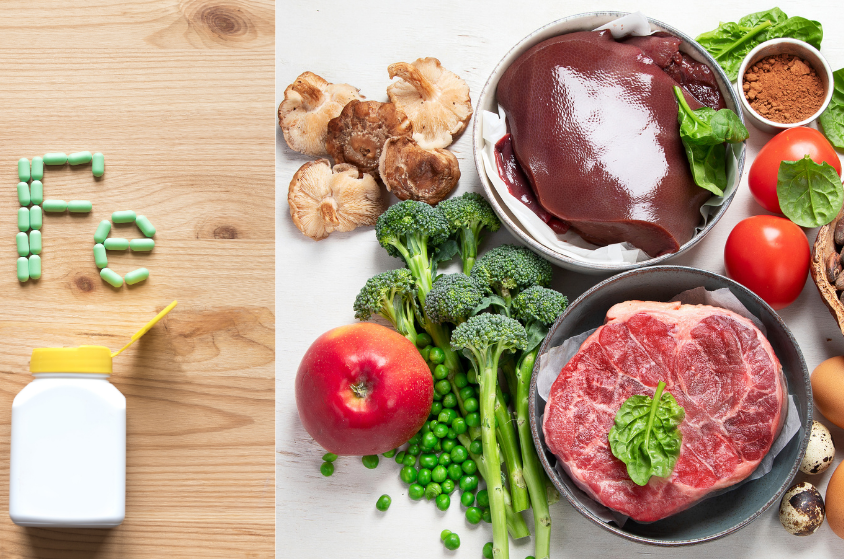
- Iron Deficiency: Medication or Supplements?
- Risk Groups for Iron Supplement Use
- The Source of Iron Forms: The Distinction Between Heme and Non-Heme
- Major Problems with Iron Medications and Supplements
- Solutions for Absorption Problems and Gastrointestinal Side Effects of Iron Supplements
- Synergy between Iron Supplements and Vitamins
- Iron + Lactoferrin Combination
- Using Iron Supplements Every Other Day
- Next-generation forms of iron to improve absorption and side effect tolerance
- Conclusion and Evaluation
- Source
Iron Deficiency: Medication or Supplements?
Demir eksikliği anemisi tanısı konmuş bireylerde, tedavi edici dozlar genellikle Elemental demir olarak 50–100 mg/gün aralığındadır. Bu doz, hemoglobin ve ferritin depolarını yeniden doldurmak için gereklidir. Ancak bu dozlar genellikle ilaç statüsündeki demir preparatlarıyla mutlaka doktor kontrolünde sağlanır, gıda takviyesiyle değil.
Türkiye’de gıda takviyelerinde bireysel kullanım için izin verilen maksimum demir dozu ise 17 mg elemental demir olarak sınırlandırılmıştır. Tek başına 17 mg demir dozu genellikle klinik demir eksikliği tedavisi için yeterli değildir. Bu doz, genel popülasyonun günlük ihtiyacını karşılamaya yönelik bir üst sınırdır ve tedavi edici amaçla değil, koruyucu veya destekleyici kullanım için belirlenmiştir. Kansızlık (anemi) teşhisi konmamış ama risk altındaki bireyler için uygun olabilir.
Risk Groups for Iron Supplement Use
Individuals who have not been diagnosed with anemia but may be at risk:
Pregnant and breastfeeding women: Increased iron requirements may necessitate supplementation; however, medication is not always necessary. Support can be safely provided with low-dose supplements.
Premature and low birth weight babies: Because their iron stores may be insufficient, they can be supported with low-dose supplements under the supervision of a doctor.
Adolescent girls and women with heavy menstruation: Blood loss is significant; if a deficiency is undiagnosed but suspected, low-dose supplementation may be considered.
Vegans and vegetarians: The bioavailability of plant-based iron is low; therefore, supplementation is recommended.
Older individuals: The risk of iron deficiency increases due to nutritional deficiencies and chronic diseases; low-dose supplementation may be appropriate.
Athletes who train intensely (especially those involved in endurance sports): Iron requirements for hemoglobin and myoglobin synthesis increase during intense exercise. Therefore, supplementation with low-dose iron may be considered.
Individuals with chronic illnesses (e.g., kidney failure, inflammatory bowel disease): Iron absorption or utilization may be impaired; supplementation can support hemoglobin levels.
The Source of Iron Forms: The Distinction Between Heme and Non-Heme
Non-heme iron : It is of plant origin (legumes, grains, leafy green vegetables). Almost all forms of iron used in supplements and medications are also in the non-heme form. Its absorption is limited because it has solubility problems in the intestine and readily interacts with food components.
Heme iron : It is of animal origin (meat, liver, fish, chicken). Because it is bound to hemoglobin or myoglobin, it is easily absorbed in the intestine by special carriers. Its absorption rate is high and it is minimally affected by food components (phytate, polyphenol, calcium).
When iron is ingested, the liver releases the hormone hepcidin. Hepcidin blocks iron transport channels in intestinal cells, preventing iron from entering the bloodstream. This effect lasts for approximately 24 hours. High doses of iron supplements (100–200 mg) significantly increase hepcidin levels, reducing the absorption of iron taken the following day.
Low doses used in supplements (10–20 mg) only slightly increase hepcidin. Therefore, supplements are formulated for daily use, and absorption is not significantly reduced when taken again the next day.
Why are non-heme formulations used in supplements and medications?
- Hem demir (örneğin heme iron polypeptide) pahalıdır, hayvansal kaynaklı olduğu için vegan/vejetaryen kullanımına uygun değildir ve her pazarda bulunmaz.
- Non-hem demir tuzları (ferroz sülfat, fumarat, glukonat) ucuz, stabil ve yüksek dozlarda üretime uygundur. Bu yüzden ilaçlarda standarttır.
- Non-heme forms (bisglycinate, polymaltose, sucrosomial, carbonyl iron, etc.) are generally preferred in supplements.
Major Problems with Iron Medications and Supplements
Patient compliance: Treatment may be discontinued due to side effects, taste problems, and the need for long-term use. Choosing formulations with low side effects, increasing tolerance with lactoferrin combination, and providing patient education strengthens compliance.
Low bioavailability: Absorption of non-heme iron in the intestine is limited. New formulations such as those using vitamin C in solution, bisglycinate or polymaltose, and combinations with lactoferrin have been developed.
Gastrointestinal side effects: Nausea, constipation, and abdominal pain are common. An alternating-day medication regimen, more tolerable newer generation formulations, and the addition of lactoferrin reduce these side effects.
Taste and tolerance issues: This is especially common in children due to the metallic taste of syrups. Flavored syrups, chewable tablets, or capsules have been developed as solutions.
Drug-food and drug-drug interactions: Iron interacts with minerals such as calcium, zinc, and magnesium, as well as beverages like coffee and tea; it also interacts with some antibiotics. Therefore, proper timing of intake and interaction management under medical supervision are important.
High doses of oxidative stress: Excess iron increases free radical production in the intestine and can lead to mucosal irritation. Using lower doses for longer periods and combining them with antioxidants provides a solution.
Hepcidin regulation: High-dose, continuous use increases hepcidin levels, restricting absorption. Therefore, every-other-day usage protocols have been developed for medications. Daily use is considered safe for supplements.
When iron is ingested, the liver releases the hepcidin hormone. Hepcidin blocks iron transport channels in intestinal cells, preventing iron from entering the bloodstream. This effect lasts approximately 24 hours. High-dose iron supplements (100–200 mg) significantly increase hepcidin levels, reducing the absorption of iron taken the following day.
However, lower doses (10–20 mg) used in supplements only slightly increase hepcidin. Therefore, supplements are formulated for daily use, and absorption is not significantly reduced when taken again the next day.
Solutions for Absorption Problems and Gastrointestinal Side Effects of Iron Supplements
Methods developed to increase absorption:
Formulated with Vitamin C – Increases solubility in acidic environments.
Lactoferrin combination – It both increases absorption and reduces side effects.
Dosage strategies – Every other day for medications, daily for supplements.
Amino acid or polysaccharide complexes – Bisglycinate, polymaltose, protein succinate.
Microencapsulation and liposomal technologies – Sucrosomial iron, liposomal iron.
Synergy between Iron Supplements and Vitamins
Vitamin C (Ascorbic Acid) facilitates the absorption of iron in the intestine. It particularly increases the bioavailability of non-heme iron from plant sources. It is always beneficial in iron therapy, whether there is a deficiency or not.
B12 (Kobalamin) DNA sentezi ve kırmızı kan hücrelerinin yapımı için gereklidir. Eksiklik olduğunda megaloblastik anemi gelişir. Eksiklik yoksa fazladan B12 almak ek bir fayda sağlamaz.
B9 (Folat) Hücre bölünmesi ve eritrosit üretimi için kritik öneme sahiptir. Gebelikte ve hızlı hücre yenilenmesinde ihtiyaç artar. Eksiklik yoksa yüksek doz folat almak gereksizdir ve B12 eksikliğini maskeleyerek nörolojik hasarı gizleyebilir.
Iron + Lactoferrin Combination
In recent years, adding lactoferrin to iron supplements has become a prominent approach, particularly in at-risk groups. Lactoferrin can bind iron, providing controlled release, regulating inflammation, and reducing the gastrointestinal side effects of iron supplements. Some clinical studies have also shown that this combination increases hemoglobin levels more quickly in pregnant women, children, and chronic disease groups, and reduces common gastrointestinal side effects of iron treatment (eg, nausea, constipation). This can make it easier to continue treatment.
However, although the lactoferrin-iron combination is clinically promising, the large-scale, consistent, and reproducible human data required for EFSA health claim approval are not yet sufficient. Therefore, there is no official health claim. See https://mytakviye.com/onayli-saglik-beyani-ne-demek/
Using Iron Supplements Every Other Day
When iron supplements are taken, the liver releases the hormone hepcidin. Hepcidin blocks iron-carrying channels in intestinal cells, preventing the newly ingested iron from entering the bloodstream. This effect lasts for approximately 24 hours. If high doses of iron are taken daily, absorption decreases due to high hepcidin levels, and side effects occur more frequently.
With every-other-day use, hepcidin levels decrease, allowing iron to pass from the intestines into the bloodstream more efficiently. Clinical studies have shown that every-other-day use of iron supplements produces similar results in hemoglobin increase as daily use, but with higher absorption and fewer side effects. Therefore, every-other-day use of iron supplements may offer advantages in terms of absorption and tolerance, especially in the treatment of diagnosed iron deficiency.
However, this approach does not apply to supplements, as the hepcidin effect in low-dose supplements is not clinically significant, and daily use is safe; every-other-day use is unnecessary.
Next-generation forms of iron to improve absorption and side effect tolerance
Due to the limited absorption and side effects of classic ferrous salts (sulfate, fumarate, gluconate), new generation iron forms have been developed. These forms aim for better absorption and fewer side effects compared to classic salts. However, they can be more expensive and their superiority over classic drug forms has not always been proven; generally, tolerance advantage is the primary factor.
Next-generation forms of iron used in pharmaceuticals in Turkey :
- Ferrous Glycine Sulfate Complex (Ferrous glycine sulfate, Ferro Sanol®) is a special form of iron combined with amino acids. It is better tolerated because it is resistant to stomach acid.
- Iron Protein Succinate (Ferplex®) is a form of iron complexed with protein. It has high gastrointestinal tolerance and can be used especially in children and pregnant women.
New generation forms of iron used in Supplements:
Ferrous bisglycinate (Ferrochel®) is an amino acid chelate form of iron. It causes fewer gastrointestinal side effects and has good bioavailability. Ferrochel® is the patented and most clinically studied version of this form. The selection of patented brands is also important here because it guarantees the production process, stability, and clinical evidence.
Examples of products containing Ferrochel’s patented raw material in Turkey:
– Velavit V-Iron & Vitamin C Supplement 30 Tablets
– Vitafenix Iron Capsules, Iron Supplement 60 Capsules
Sucrosomial® Iron (PharmaNutra, Italy) is a patented form of microencapsulated iron. Because the iron is transported in a special capsule, it is protected from stomach acid and easily absorbed in the intestine. Normal iron salts are bound to the DMT1 transporter, which is controlled by the body; Sucrosomial® Iron, however, can enter the cell without needing this transporter. Therefore, its absorption continues even in cases of inflammation or high hepcidin levels.
Examples of products containing Sucrosomial® Iron patented raw material in Turkey:
– Sidefer Capsule, Supplement containing Sucrosomial Iron, Vitamin C and Vitamin B12, 30 capsules
– Sidefer Stick Oral Powder Sachet, Supplement containing Sucrosomial Iron and Vitamins, 20 sachets/box
Lipofer® (Lipofoods/Lubrizol, Spain) is another patented form of microencapsulated iron. The iron is broken down into very small particles and protected by a lecithin coating. This reduces stomach irritation and facilitates easier absorption in the intestines.
Examples of products containing Lipofer’s patented raw material in Turkey include:
– Orzax Ocean Microfer Dietary Supplement 30 ml
– Orzax Ocean Microfer Iron and Vitamin C 60 Capsules
Conclusion and Evaluation
Iron deficiency anemia is one of the most common nutritional problems encountered in both clinical practice and daily life. Choosing the right formulation directly affects treatment success and patient comfort.
Classic drug forms are still powerful and necessary treatments for iron deficiency anemia. However, more personalized options are emerging thanks to low-dose supplementation approaches, every-other-day use protocols, amino acid chelates, microencapsulation technologies, and lactoferrin combinations.
Supplement use should be conscious and based on need, and high-dose drug treatments should be planned under the supervision of a physician.
The data summarized in this article is shared to support the decisions of consumers and healthcare professionals. For more information, you can review the resources below.
Source
- European Food Safety Authority (EFSA). Scientific Opinion on Dietary Reference Values for iron. EFSA J. 2015;13(10):4254.
- Tolkien Z, Stecher L, Mander AP, Pereira DI, Powell JJ. Ferrous sulfate supplementation causes significant gastrointestinal side-effects in adults: a systematic review and meta-analysis. PLoS One. 2015;10(2):e0117383.
- Moretti D, Goede JS, Zeder C, et al. Oral iron supplements increase hepcidin and decrease iron absorption from daily or twice-daily doses in iron-depleted young women. blood 2015;126(17):1981–1989.
- Stoffel NU, Zeder C, Brittenham GM, et al. Iron absorption from oral iron supplements given on consecutive versus alternate days and as single morning doses versus twice-daily split dosing in iron-depleted women. Lancet Haematol. 2017;4(11):e524–e533.
- Camaschella C. Iron-deficiency anemia. N Engl J Med. 2015;372(19):1832–1843.
- Auerbach M, Adamson JW. How we diagnose and treat iron deficiency anemia. AmJ Hematol. 2016;91(1):31–38.
- Paesano R, et al. Oral lactoferrin versus ferrous sulfate in pregnant women with iron deficiency anemia: a prospective study. Gynecol Obstet Invest. 2006;61(3):230–235.
- Drago-Serrano ME, et al. Lactoferrin as an adjunct in the treatment of anemia of inflammation and iron deficiency. Biometals. 2020;33(3):317–329.
- Hurrell R, Egli I. Iron bioavailability and dietary reference values. Am J Clin Nutr. 2010;91(5):1461S–1467S.
- Abbaspour N, Hurrell R, Kelishadi R. Review on iron and its importance for human health. J Res Med Sci. 2014;19(2):164–174.
- Gómez-Ramírez S, et al. Sucrosomial® iron: a new generation iron for improving oral supplementation. Pharmaceuticals. 2018;11(4):97.
- Pineda O, Ashmead HD. Effectiveness of treatment of iron-deficiency anemia in infants and young children with ferrous bis-glycinate chelate. nutrition 2001;17(5):381–384.